Hot Bird Seed
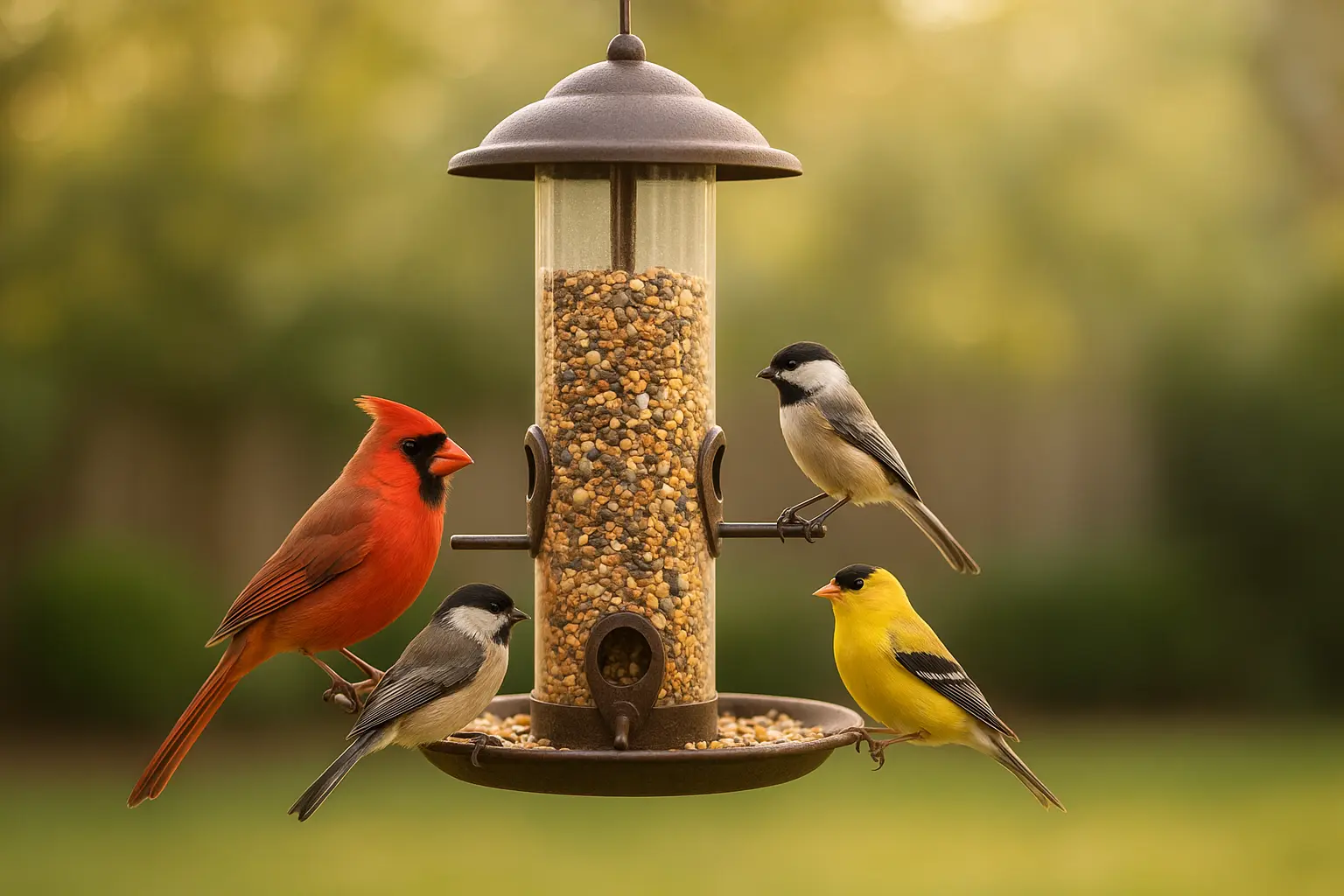
Give your backyard birds something delicious and keep the squirrels out of your feeders for good. Hot pepper bird seed is an easy, natural, and bird-safe way to stop seed thieves.

What Exactly Is Hot Bird Seed?
Hot bird seed—sometimes called hot pepper bird seed or spicy bird seed—is regular, high-quality bird seed that's coated with capsaicin: the compound that makes chili peppers spicy.
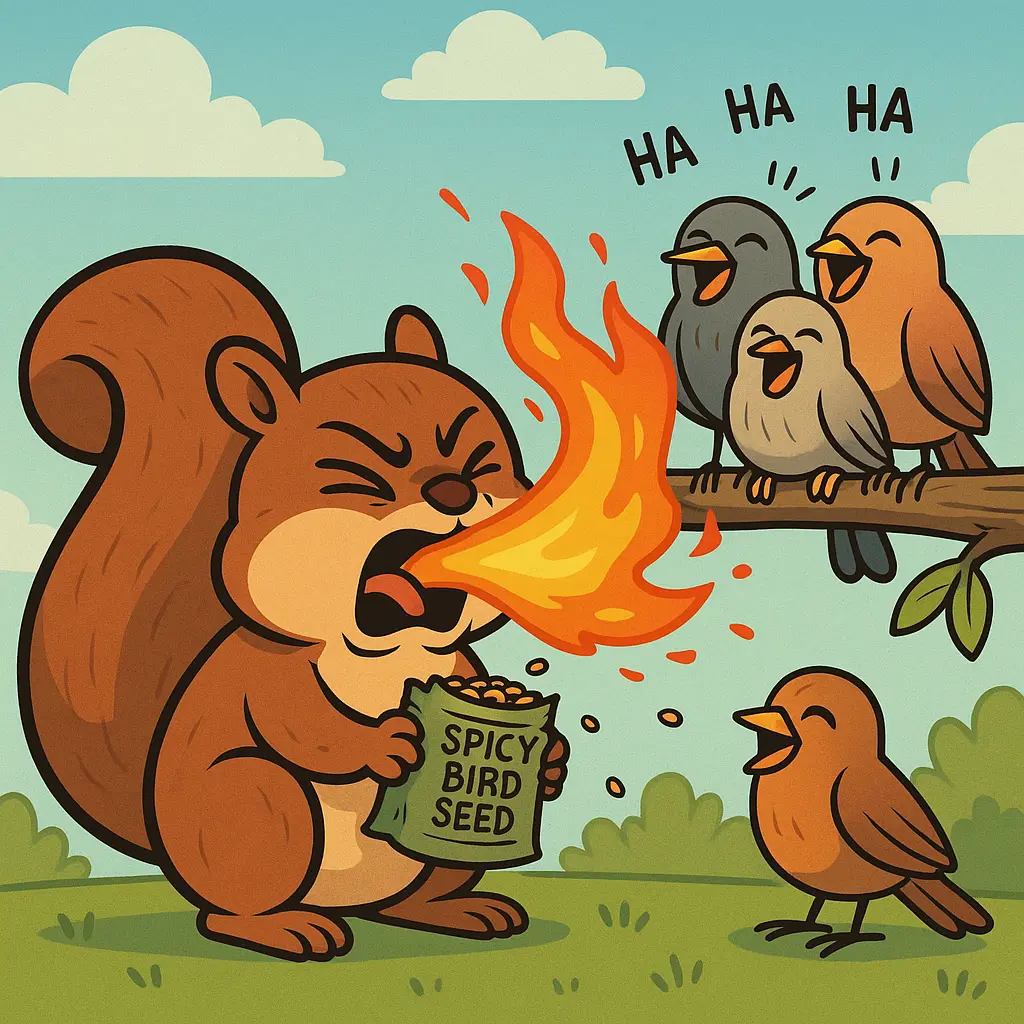
Here's the fun part: birds can't feel the heat at all…but squirrels definitely can!
That means:
 Birds get a tasty, nutritious meal
- Squirrels take one bite and immediately lose interest
- You get peaceful, squirrel-free bird watching
It's a simple solution, safe for birds, and wonderfully effective.
Shop Hot Bird SeedWhy Choose Hot Pepper Bird Seed?
Enjoy a squirrel-proof feeder without complicated gadgets or expensive contraptions.
Get StartedNaturally Squirrel-Deterring
Capsaicin makes spicy seed unappealing to squirrels, chipmunks, and other seed-stealing critters.
No-Mess Seeds
Many hot bird seed blends use hulled sunflower hearts. No shells = less mess and fewer unwanted pests under your feeder.
100% Bird-Friendly
Birds don't have the receptors to feel "heat," so spicy seed tastes completely normal to them.
Easy to Use
Just pour the spicy seed into your feeder and let the birds enjoy. No extra steps needed.


How Does Spicy Bird Food Actually Work?
The biology of birds, mammals, and hot peppers tells us that:
- Birds do not have capsaicin receptors, so they literally cannot taste or feel "spice."
- Mammals do have those receptors, so squirrels, raccoons, and rodents immediately feel the heat and stay away.
- Capsaicin oil binds to the seed, staying effective even in cold weather or light rain.
The result: pest-free feeders and more food for the birds you love.
Why Squirrels Hate Spicy Bird Seed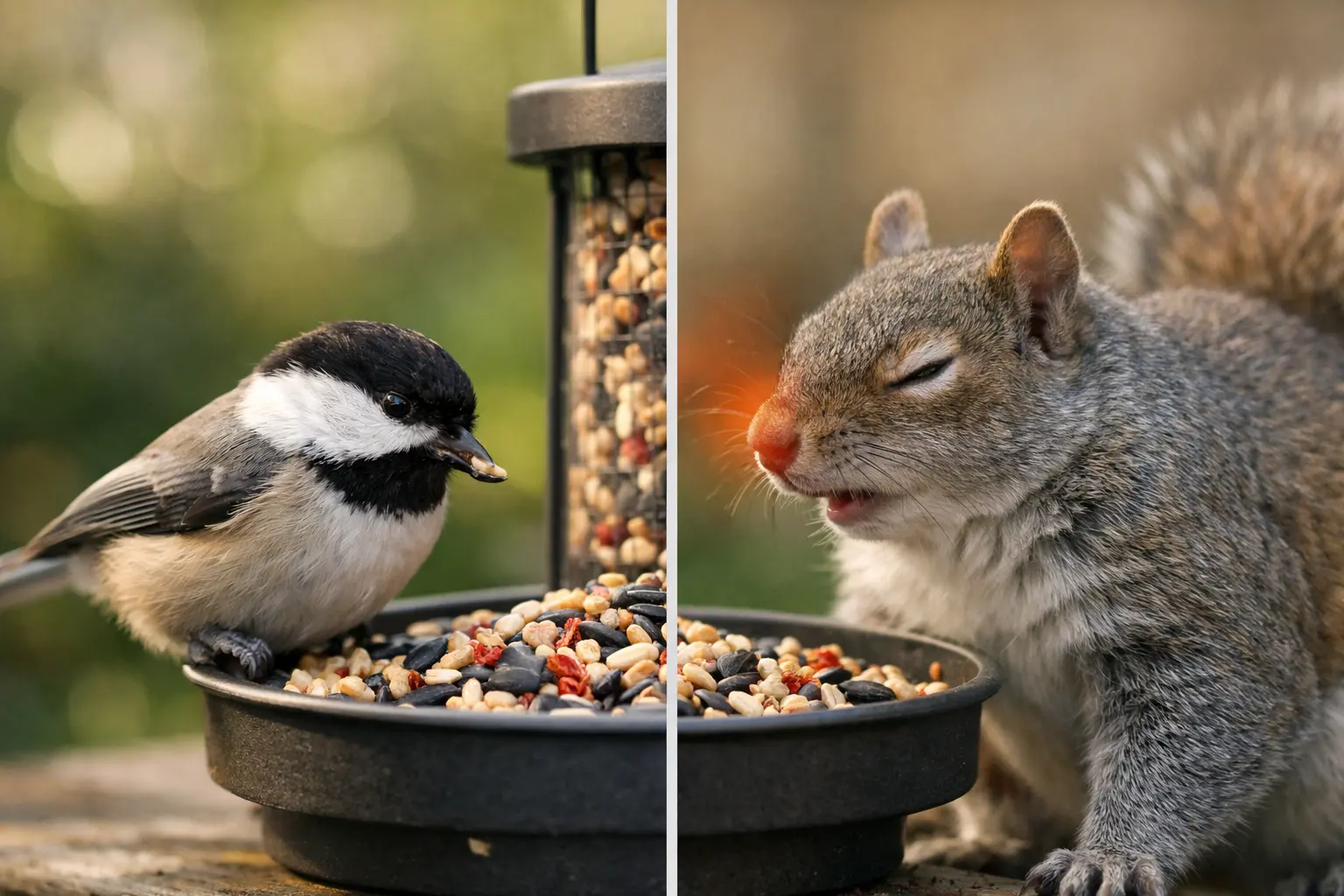
Can You Make Your Own Hot Bird Seed?
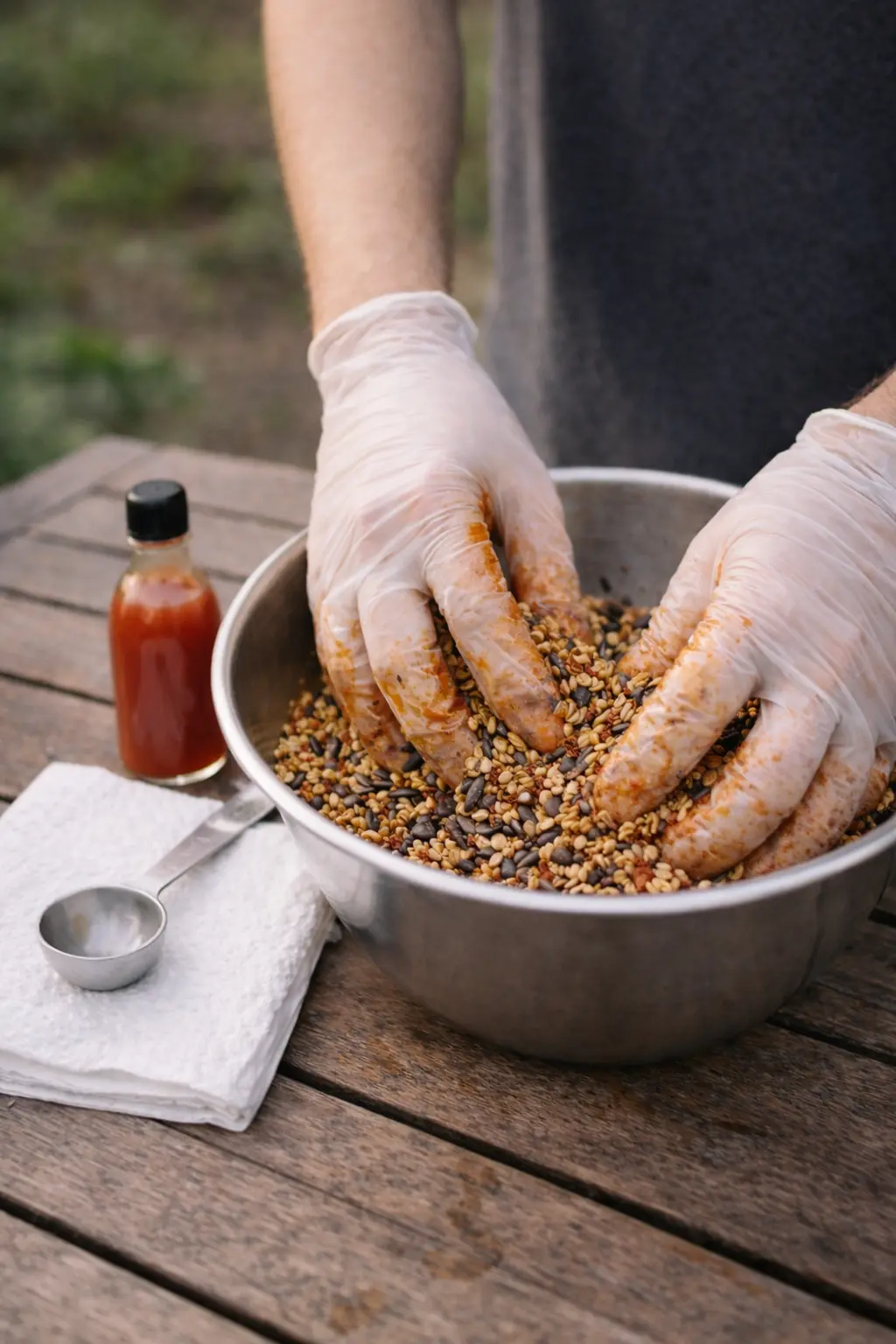
Yes, you can make a DIY spicy seed blend using your own bird food and liquid capsaicin chili oil. But here are a few things to consider:
Chili Oil Can Be Tricky to Handle
Handling concentrated chili oil or capsaicin can easily irritate your hands, eyes, and nose. Even a small amount on your skin can cause a burning sensation, so gloves and careful cleanup are essential.
Getting the Spice Level Right Isn't Always Easy
When mixing your own blend, it's common to over-spice or under-spice the seed. Birds tolerate capsaicin well, but too much can clump the seed or create a harsh smell—while too little won't deter squirrels.
Store-Bought Blends Are Evenly Coated
Commercial hot bird seed is mixed in controlled conditions, so every seed gets an even, consistent coating. This not only works better but also keeps the spicy residue off your hands and feeders.
DIY Often Ends Up More Expensive
Liquid capsaicin and chili oils can be pricey, and you may need more than expected to coat a full batch of seed. Many people find that making their own blend costs more than simply buying a pre-made bag.
Tinkering Is Fun—But Ready-Made Is Usually Easier
If you enjoy experimenting and you're careful with the ingredients, making your own blend can be a satisfying project. Still, for most people, ready-made spicy seed is the cleaner, safer, and more convenient option.
Frequently Asked Questions
Yes! Birds lack the receptors to detect capsaicin, so hot bird seed is completely safe and tastes normal to them. Many bird species, including cardinals, finches, and chickadees, happily eat spicy seed with no adverse effects.
Yes! Squirrels and other mammals have capsaicin receptors that make hot pepper seed unpleasant for them. After one or two tries, they typically avoid the feeder entirely. It's a humane, effective deterrent that doesn't harm the animals.
All seed-eating birds enjoy hot bird seed equally since they can't taste the spice. This includes cardinals, blue jays, finches, sparrows, chickadees, nuthatches, and woodpeckers.
Pets can feel the heat from capsaicin, but the small amounts on bird seed are unlikely to cause harm. However, it's best to keep feeders out of reach of curious pets. If your pet eats some spicy seed, they may experience mild discomfort but no lasting effects.
Yes! Capsaicin oil bonds well to seed and remains effective in cold temperatures. Rain and light snow won't wash it off easily, making it a reliable year-round solution for squirrel problems.
Like squirrels, raccoons are mammals with capsaicin receptors. Most raccoons will avoid spicy seed after tasting it. However, some determined raccoons may tolerate mild spice levels, so higher capsaicin concentrations work better.
Yes, you can mix hot bird seed with regular seed. Keep in mind that squirrels may pick out the non-spicy seeds, so using 100% hot seed is more effective for complete deterrence.
Quality hot bird seed uses oil-based capsaicin that adheres well to seeds. Light rain and snow won't significantly reduce effectiveness. Heavy, prolonged rain may dilute it over time, so covered feeders help maintain potency.
Where can I buy hot bird seed?
- 01
Hearts on Fire Hot Bird Seed, 10 lb.

100% Hulled Sunflower Hearts with Chili Pepper Oil – No Waste Bird Seed for Outside Feeders. Ingredients: Sunflower Kernels, Red Pepper Extract
- 02
Cole's BH20 Blazing Hot Blend Bird Seed, 20 lb.
Blazing Hot Blend is a traditional mix of highly desired seeds enhanced with super-hot, food grade habanero chilies. Ingredients: Black Oil Sunflower, Sunflower Meats, White Proso Millet, Cracked Corn, Food-grade Liquid Habanero Chili Peppers, Safflower Oil
- 03
Cole's BH10 Blazing Hot Blend Bird Seed, 10 lb.
Blazing Hot Blend is a traditional mix of highly desired seeds enhanced with super-hot, food grade habanero chilies. Ingredients: Black Oil Sunflower, Sunflower Meats, White Proso Millet, Cracked Corn, Food-grade Liquid Habanero Chili Peppers, Safflower Oil
- 04
Cole's BH05 Blazing Hot Blend Bird Seed, 5 lb.
Blazing Hot Blend is a traditional mix of highly desired seeds enhanced with super-hot, food grade habanero chilies. Ingredients: Black Oil Sunflower, Sunflower Meats, White Proso Millet, Cracked Corn, Food-grade Liquid Habanero Chili Peppers, Safflower Oil
- 05
Cole's CB10 Cajun Cardinal Blend Bird Seed, 10 lb.
Cajund Cardinal Blend combines fiery hot chilies with Safflower, which cardinals love. Ingredients: Sunflower Meats, Safflower, Food-grade Liquid Habanero Chili Peppers, Safflower Oil.
- 06
Cole's CB05 Cajun Cardinal Blend Bird Seed, 5 lb.
Cajund Cardinal Blend combines fiery hot chilies with Safflower, which cardinals love. Ingredients: Sunflower Meats, Safflower, Food-grade Liquid Habanero Chili Peppers, Safflower Oil.
Get Our Free Backyard Bird Feeding Guide
Join our email list and get a free copy of our "Squirrel-Proof Bird Feeding Guide" — filled with tips on feeders, setup, seed, and how to attract more colorful birds.